Academics
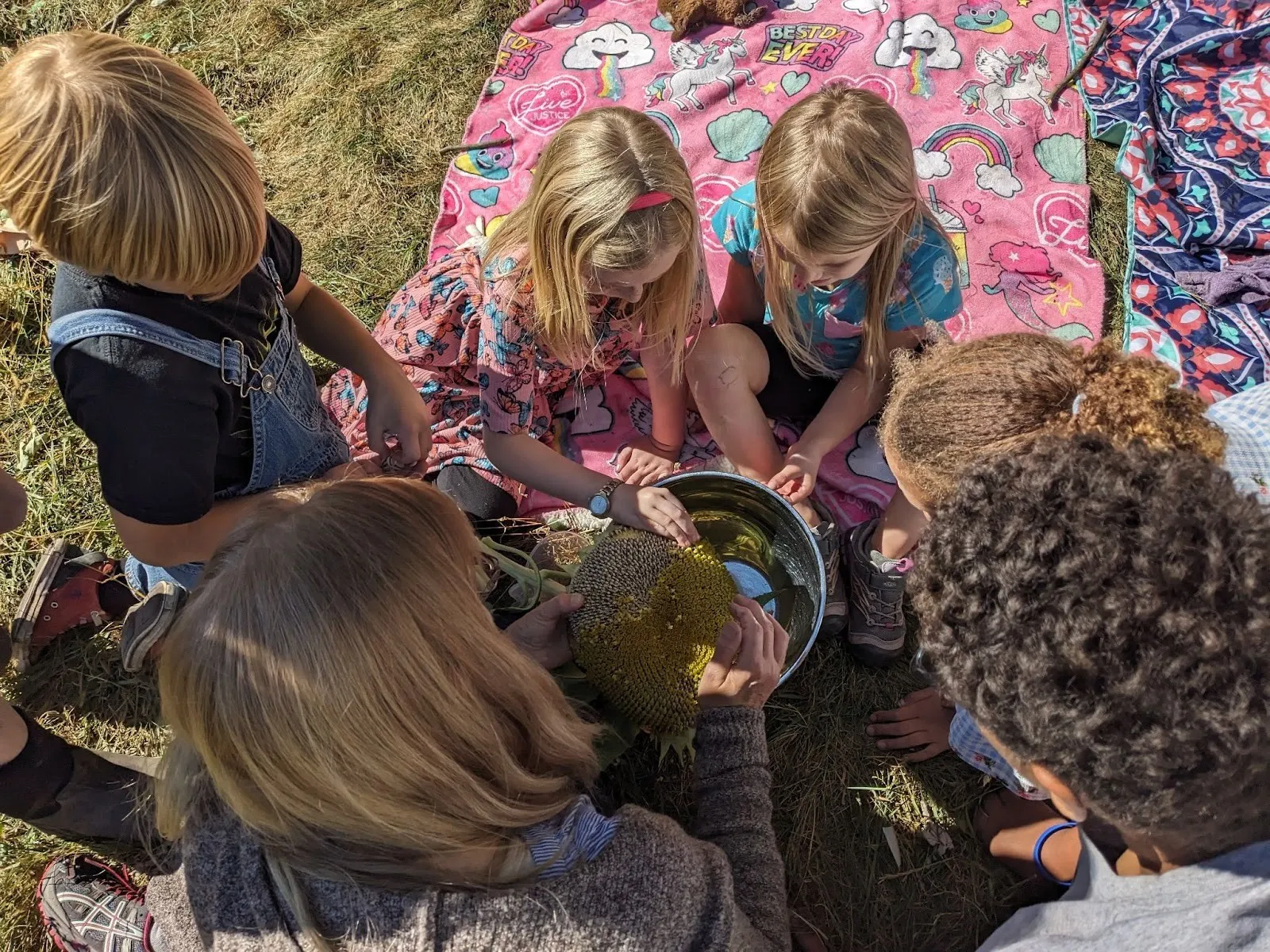
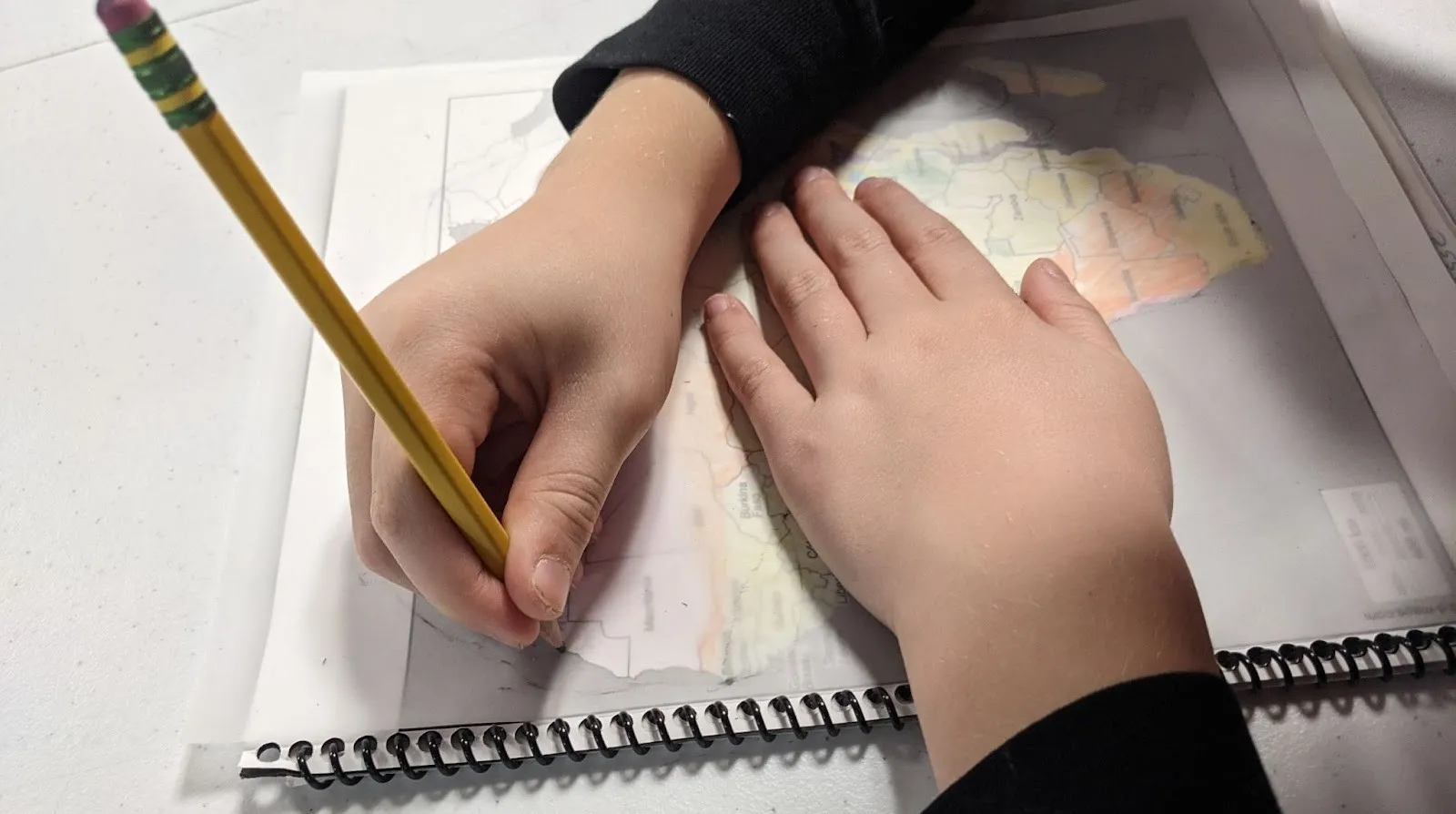
Sundial Classical School offers academically rigorous instruction in core subjects (English, Literature, Math, Science, History, and Geography) as well as skills and content that are integral to a rich liberal arts education (Art Study, Music Appreciation, Poetry Memorization, Penmanship, Rhetoric, Logic, and Latin). The Fine Arts (i.e. painting, dance, handicrafts) are incorporated throughout the curriculum via meaningful projects designed to enrich the student’s understanding of core content taught in Math, Science, or History classes. The Common Arts (i.e. carpentry, agriculture, textiles) are primarily taught during the Friday program.
While our academic program is only four days a week - Monday through Thursday - our students master as much content as students in modern school settings who attend five days a week. We accomplish this by guiding students to hone their habits of attention so that they use every instructional minute wisely. We create a hushed, focused environment and maintain high expectations for deep mastery of content the first time it is presented. This leads to a more efficient learning cycle because we do not lose time endlessly reviewing previously taught material.
Students are also more successful, and progress more quickly, in our model specifically because we create ability-based (not age-based) instructional groups. Students are placed at just the right level so that they are challenged but not overwhelmed. Instructors assess informally on a daily basis so that the material moves with the child instead of the child having to conform to the pace of the curriculum. This means that when a child has a growth spurt and makes an intellectual leap we can move him or her forward to keep them at their challenge level. Whereas students in large, age-based classes often spend some days bored and waiting on classmates, our students are free to move as rapidly as they’re able and willing to.
Standardized assessments show that students in their first year with us frequently make from 1.5 to 2.0 years worth of growth in one school year. After that our students consistently score at or above grade level on nationally normed assessments of reading and math.
Curricular Resources Used for Each Multi-Age Band
View curricular resources as an image
Multi-Age Class | English | Math | History | Science |
|---|---|---|---|---|
Prima, ages 5-6 (K-1st) 2 years | Heggerty Phonemic Awareness Logic of English - Foundations A, B, C, D | RightStart Level A | n/a | Treehouse Schoolhouse nature study guides |
Secunda, ages 7-9 (2nd-4th) 3 years | Logic of English - Essentials A, B Cottage Press Progymnasmata (Primers 1-3) | RightStart Level B, C, D | Invictus Classical Press - Ancients Teacher’s choice of supplemental literature | Treehouse Schoolhouse nature study guides Invictus Classical Press - Biology (Fri Program only) |
Tertia, ages 10-12 (5-7th) 3 years | Logic of English - Essentials C, D Cottage Press Progymnasmata (Fable & Song) | RightStart Level E, F, G | Invictus Classical Press - Middle & Renaissance Teacher’s choice of supplemental literature | Invictus Classical Press - Earth Science (Fri Program only) Novare Science (M-Th) -Life Science (6th) -Physical Sci (7th) |
Quarta, ages 13-15 (8-10th) 3 years | Cottage Press Progymnasmata (Bards & Poets) | (not yet determined) | Invictus Classical Press - Early Modern Teacher’s choice of supplemental literature | Invictus Classical Press - Astronomy (Fri Program only) Novare Science (M-Th) -Earth Sci (8th) -Physics (9th) -Biology (10th) |
Quinta, ages 16-17 (11-12th) 2 years | Cottage Press Progymnasmata (Poetics & Progym) Teacher's choice of supplemental literature | (not yet determined) | Invictus Classical Press - Modern & American OR Humanitas: American Origins, American Republic | Invictus Classical Press - Chemistry (Fri Program only) Novare Science (M-Th) -Chemistry (11th) -Environmental (12th) |
Evaluation Schedule and Reporting Method
The size of the screen on your device is a bit small to display this table.Click here for an image of the table or try accessing it on a computer or device with a larger screen.
Evaluation Schedule and Reporting Method This chart shows when and how each type of skill is measured and reported to parents throughout the year. | |||||||
|---|---|---|---|---|---|---|---|
| Skill & Assessment Type | Sept - Baseline Measurements | Oct - Parent/Teacher Conferences | Nov - Student Performance | Dec - 1st Semester Report Card | Feb - Parent/Teacher Conferences | May - Student Performance | June - 2nd Semester Report Card |
| Reading Skills - nationally norm-referenced test | • | • | • | ||||
| Mathematics Concepts - nationally norm-referenced test | • | • | • | ||||
| Written Composition & Penmanship - sample | • | • | |||||
| Mathematics Facts - fluency and application | • | • | • | • | |||
| Grammar & Spelling - identification and application | • | • | |||||
| Poetry - memorization and oral recitation | • | • | • | • | |||
| History & Geography - narration and application | • | • | • | • | |||
| Nature Study & Science - identification and application | • | • | • | • | |||
| Latin - knowledge and oral recitation | • | • | • | • | |||
| Common Arts - demonstration of skills and work ethic | • | • | |||||
| Fine Arts - demonstration of skills and work ethic | • | • | |||||
| Child Formation - application of scholar skills during academic tasks; application of virtues in all settings | • | • | • | • | |||